Situated Technologies, a project by Omar Khan, Trebor Scholz, and Mark Shepard, is a co-production of the Center for Virtual Architecture, The Institute for Distributed Creativity (iDC), and the Architectural League of New York.
About the ProjectSituated Technologies, a project by Omar Khan, Trebor Scholz, and Mark Shepard, is a co-production of the Center for Virtual Architecture, The Institute for Distributed Creativity (iDC), and the Architectural League of New York. |
Modulated Cities: Networked Spaces, Reconstituted Subjects
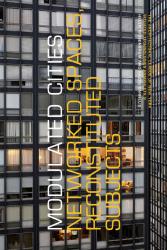
Situated Technologies Pamphlets 9: Modulated Cities: Networked Spaces, Reconstituted Subjects Helen Nissenbaum and Kazys Varnelis In Situated Technologies Pamphlets 9, Helen Nissenbaum and Kazys Varnelis initiate a redefinition of privacy in the age of big data and networked, geo-spatial environments. Digital technologies permeate our lives and make the walls of the built environment increasingly porous, no longer the hard boundary they once were when it comes to decisions about privacy. Data profiling, aggregation, analysis, and sharing are broad and hidden, making it harder than ever to constrain the flow of data about us. Cautioning that suffocating surveillance could lead to paralyzed dullness, Nissenbaum and Varnelis do not ask us to retreat from digital media but advance interventions like protest, policy changes, and re-design as possible counter-strategies. The Internet of People for a Post-Oil World
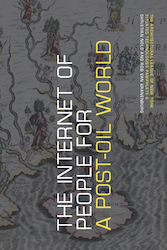
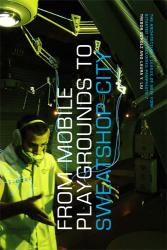
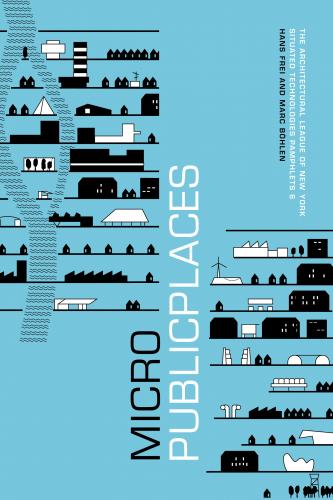
Situated Technologies Pamphlets 8: The Internet of People for a Post-Oil World Christian Nold and Rob van Kranenburg The authors articulate the foundations of a future manifesto for an Internet of Things in the public interest. Nold and Kranenburg propose tangible design interventions that challenge an internet dominated by commercial tools and systems, emphasizing that people from all walks of life have to be at the table when we talk about alternate possibilities for ubiquitous computing. Through horizontally scaling grass roots efforts along with establishing social standards for governments and companies to allow cooperation, Nold and Kranenberg argue for transforming the Internet of Things into an Internet of People. From Mobile Playgrounds to Sweatshop City Situated Technologies Pamphlets 7: From Mobile Playgrounds to Sweatshop City Trebor Scholz and Laura Y. Liu The authors reflect on the relationship between labor and technology in urban space where communication, attention, and physical movement generate financial value for a small number of private stakeholders. Online and off, Internet users are increasingly wielded as a resource for economic amelioration, for private capture, and the channels of communication are becoming increasingly inscrutable. Liu and Scholz ask: How does the intertwining of labor and play complicate our understanding of exploitation? MicroPublicPlaces Situated Technologies Pamphlets 6: Marc Böhlen and Hans Frei In response to two strong global vectors: the rise of pervasive information technologies and the privatization of the public sphere, Marc Böhlen and Hans Frei propose hybrid architectural programs called Micro Public Places (MMPs). MPPs combine insights from ambient intelligence, human computing, architecture, social engineering and urbanism to initiate ways to re- animate public life in contemporary societies. They offer access to things that are or should be available to all: air, water, medicine, books, etc. and combine machine learning procedures with subjective human intuition to make the public realm a contested space again. |